
Thursday, April 2, 2026

Marketing Pro

Messaging + Positioning

See all
Motor claims, simplified — faster processing across 186 cities with assured delivery program

Motor claims, simplified — faster processing across 186 cities with assured delivery program

New narrative: Policybazaar frames its Assured Delivery Program as "Motor claims, simplified" and a "benchmark for seamless, transparent, and dependable claims settlement" across India. The program turns claims from a fragmented, frustrating experience into a managed service with assured timelines and end‑to‑end support. Buyer persona: Primarily retail motor policyholders (especially in Tier‑2/3+ cities) who are frustrated with slow, opaque claims and repeated garage follow‑ups; secondarily insurers looking for higher‑quality digital distribution and customer experience at scale. Key claims & proof points: - Geographic and scale proof: Launched in 2024, now "introduced…with 200 garages in 186 cities across India" and "nearly 30,000 customers have benefited" so far. - Service features positioned as must‑have: a dedicated relationship manager as a single point of contact, time‑bound repairs, cashless claims, free pick‑up and drop, regular consolidated updates, and part warranties on repaired electrical/mechanical parts (per insurer T&Cs). - Speed metric: "minor repairs involving claims below ₹50,000 are completed within seven days." - Strategic narrative: Designed exclusively for customers who bought motor insurance via Policybazaar; described as "a strong example of Policybazaar’s customer‑first approach" and a model they intend to scale nationwide. - Market proof: Policybazaar cites a "dominant market share of over 93% in India's digital insurance aggregator space" and more than ₹15,000 crore in annual premiums with 80.5m registered users and 49.3m policies. Best supportive interpretation: Policybazaar is using ADP to redefine what buyers should expect from motor insurance—moving the perceived value from just price/coverage to claims experience. By baking in speed guarantees, logistics (pick‑up/drop), and relationship management, ADP turns a commodity product into a concierge‑like service and builds high switching costs. For insurers, it creates a quasi‑managed network with better NPS and lower friction, which can justify preferential terms. The expansion beyond metros into 186 cities plus an explicit focus on Tier 3 and beyond reinforces an "inclusive infrastructure" positioning rather than just a digital front end. Strongest skeptical critique: The value proposition hinges on execution quality at partner garages and on insurers’ adherence to timelines and warranties—both partially outside Policybazaar’s full control. The seven‑day SLA only applies to "minor" claims under ₹50,000, which may exclude the most painful, high‑value incidents for customers. Since ADP is restricted to policies purchased via Policybazaar, buyers might see it as a lock‑in tactic, and competitors could undermine the narrative by highlighting edge cases where timelines slipped or where the relationship manager model didn’t materially change the experience. Positioning wedge / counter‑position line for a fractional CMO: - Wedge: "Insurance that starts working when the accident happens, not when the paperwork ends." Emphasize that Policybazaar is no longer just an aggregator—it’s a claims‑journey owner. - Offensive line: "If your motor insurer can’t tell you who will pick up your car, when it’ll be back, and how your repairs are warranted, you’re not insured—you’re on your own." - Defensive against incumbents: "Traditional insurers sell you a policy. We’ve productized the claim itself—seven‑day repairs for everyday incidents, a single relationship manager, and cashless, managed garages from Kashmir to Kanyakumari." Named exec & source: - Sandeep Saraf, Business Head, Motor Insurance Renewals and Customer Experience, Policybazaar.com - Source: art_9cd74ec6b75343b4818fcf082d0a2b60

Ht Syndicationwww.hindustantimes.com3 min read
Business News | T9L Venture Studio Backs 'Revenue OS' Startup Forsyt with Strategic Investment

Business News | T9L Venture Studio Backs 'Revenue OS' Startup Forsyt with Strategic Investment

T9L venture studio is backing Forsyt, which is branding itself as an AI "Revenue Operating System" that eliminates tool fatigue and turns fragmented revenue data into clear next steps for sales teams.

Latestly4m

CZR Exchange Unveils CZR VIP Program for High-Volume Traders

CZR Exchange has launched a volume‑based "CZR VIP" tier program pitched at high‑frequency and high‑volume crypto traders, blending better execution and fees with real‑world VIP experiences like private events and F1 weekends.

www.unitedkingdomnews.net4m
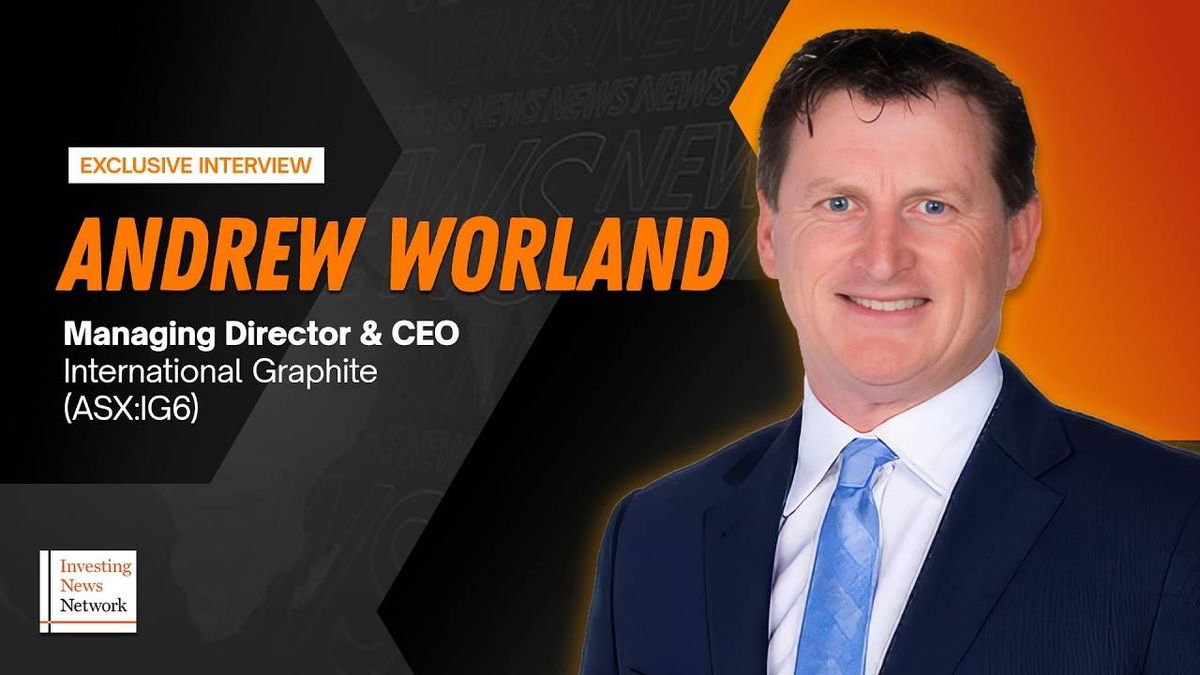
International Graphite Eyes European Supply Gap with Alkeemia JV

International Graphite Eyes European Supply Gap with Alkeemia JV

Investing News Network (inn)
Anthony Albanese warns of tough times ahead but Australia will stay open for business

Anthony Albanese warns of tough times ahead but Australia will stay open for business

thewest.com.au
Penfolds owner staring down bankruptcy

Penfolds owner staring down bankruptcy

www.news.com.au

Brand Risk + Trust

Stocks Sink, Oil Leaps above 100, Trump Vows to Keep Hitting Iran

Stocks Sink, Oil Leaps above 100, Trump Vows to Keep Hitting Iran

Timeline & scope: On April 2, 2026, following President Trump’s primetime address on Iran, global markets “recoiled,” according to a Reuters‑sourced analysis. Trump said the U.S. would hit Iran “extremely hard” within weeks, claimed key military objectives were close to being met, but gave no clear exit timeline. Brent crude for June jumped over 6% to $107.69 per barrel as investors noted the speech offered no specifics on reopening the Strait of Hormuz, a vital shipping route whose closure is “hitting Asia hard.” U.S. stock futures fell 1.3%, European futures dropped over 2%, and Asian indices were “clobbered” (Nikkei –2.4%, Kospi –4.7%, broader Asia ex‑Japan down >2%). The U.S. dollar strengthened and Treasury yields rose on revived stagflation concerns—high inflation from energy prices combined with weaker growth—while hopes for ceasefire‑driven relief, which had lifted markets in prior sessions, faded. Customer impact & narrative channels: For financial brands, consumer‑facing energy companies, and major retailers, this piece reinforces the perception that the administration’s communication is worsening volatility: investors “found little reassurance” and saw “no additional certainty or clarity around timeline,” pushing them into defensive postures. The story has been syndicated through market‑watch platforms and trading communities, influencing how both professionals and retail investors talk about war‑related risk on X, Reddit finance subs, and business TV. Households will encounter this indirectly through coverage of falling portfolios, rising mortgage and borrowing costs, and higher pump prices, possibly attributing part of that pain to policy and messaging choices in Washington. Supporting vs. opposing trust narratives: A supporting view is that Trump was candid about the expectation of “2–3 more weeks of action,” enabling corporates and markets to at least plan around a working timeframe, and that emphasizing toughness on Iran could be framed as necessary to secure long‑term energy stability once the conflict ends. The opposing view is that signaling more weeks of intensified warfare, while offering no concrete path to reopening Hormuz and downplaying global oil dependence (“the United States does not need the key oil gateway”), amplifies fears of prolonged supply disruption and stagflation; this undercuts confidence in economic stewardship and reinforces criticism that short‑term political goals are being prioritized over global and domestic financial stability. Key official statements/documents: The core primary statement is Trump’s televised address referencing hitting Iran “extremely hard” within weeks and analogizing the war’s duration to prior conflicts. Analysts quoted, like Jon Withaar of Pictet and Prashant Newnaha of TD Securities, provide expert interpretation of that speech for markets, noting its lack of actionable clarity on Hormuz and its implications for risk‑off behavior. Recommended comms moves: 1) Internal alignment: Investor‑facing companies should have IR, treasury, and comms teams agree on a unified narrative linking war‑driven volatility to your hedging, capital allocation, and pricing policies; stress that you are not making speculative windfall gains from crisis pricing. 2) External statement: In earnings calls, press releases, and customer updates, explicitly separate your brand from government decision‑making, emphasizing prudent risk management and long‑term planning; acknowledge macro uncertainty while reiterating any guidance ranges or buffers you have in place to weather high‑oil, high‑rates scenarios. 3) Customer support & financial wellness: Banks, fintechs and insurers can use this news hook to push educational content on budgeting, rate risk, and diversification; consider targeted relief (fee waivers, flexible payment plans) for vulnerable customer segments most affected by higher fuel and borrowing costs, signaling that you recognize how geopolitically driven shocks are hitting household finances.

Gurutrade.com - Unique Platform For Traders4 min read