Wednesday, April 1, 2026

Explained and Contextual

Deep dives

Invisible plumes and ‘terrible pollution’: the reality of the US gas sites rated ‘grade A’

Invisible plumes and ‘terrible pollution’: the reality of the US gas sites rated ‘grade A’

This longform investigation scrutinises MiQ, a UK‑based non-profit that runs the world’s largest voluntary methane‑certification programme for oil and gas. MiQ is being promoted by BP, ExxonMobil, EQT and others as a way to show compliance with the EU Methane Regulation (EUMR), which requires continuous monitoring, reporting and verification of methane emissions at production sites and will soon cover imports. Reporters partnered with environmental monitoring groups and consultancies, visiting 10 MiQ‑certified sites in the Permian Basin using optical gas-imaging cameras. They documented large, invisible methane plumes, unlit or malfunctioning flares effectively venting gas, and leaking tanks and valves at facilities whose MiQ grades (A–C) imply leakage rates below 0.2% of production. Independent experts, including a former Texas regulator and an atmospheric chemist at Texas A&M, characterised these as “huge emissions” and noted that all “candlestick” flares emit methane, making low-intensity claims in a heavily flaring basin like the Permian hard to reconcile with field evidence. New MethaneSAT satellite data (EDF/Harvard, Feb 2026) showed Permian methane emissions between 2.4–4% of production—among the world’s highest and far above MiQ thresholds and US EPA operator‑reported inventories. Additional aerial surveys from the Global Airborne Observatory found repeated “super‑emitter” events over Exxon’s Poker Lake complex, even as Exxon reported no venting or flaring in state filings. DataDesk cross‑referenced these detections with MiQ‑certified site coordinates, reinforcing a pattern of under‑reporting. The piece then dissects MiQ’s methodology: auditors review operator‑supplied annual emissions inventories and procedures but do not make independent site measurements or calculate emissions themselves. Direct measurement is not required, nor is the use of specific third‑party satellite or aerial datasets, though some operators voluntarily incorporate them. Experts from Colorado State University and Purdue explain that most company inventories rely on short‑duration measurements, engineering factors and statistical extrapolation, which peer‑reviewed studies repeatedly show underestimate actual emissions. The article also probes MiQ’s trading rules: certificates can be “decoupled” from the specific molecules they certify and resold within a country—e.g., deals on CG Hub and Xpansiv allow high‑emitting gas streams to be paired with low‑emission certificates. An EU MEP who helped write the EUMR questions whether such decoupled credits comply with the regulation’s intent that certification reflect the emissions of the actual imported gas. MiQ executives defend their framework as broader than many regulatory regimes and stress controls on cross‑regional transfers, but critics liken certificate trade to “copying homework.” Overall, the investigation combines on‑the‑ground leak imaging, satellite/aerial datasets, regulatory filings, market deals and expert interviews to show a systemic gap between certified “responsible gas” claims and atmospheric reality—raising serious questions about using voluntary certification as a cornerstone of EU methane policy and global gas decarbonisation narratives.

yahoonewsr/climate3 min read

History and precedent

See all
Foreign states continue to harass and intimidate Canadians, RCMP says

Foreign states continue to harass and intimidate Canadians, RCMP says

The RCMP’s clarification about foreign states harassing Canadians fits into a long pattern where security services possess substantial intelligence about covert repression but face high barriers to criminal prosecution. An instructive chain comes from US experience with Soviet bloc and later Chinese ‘transnational repression’. During the Cold War, the FBI often had detailed intelligence from surveillance and defectors on Soviet targeting of dissidents, but few charges could be laid until specific acts violated US law and could be proven with unclassified evidence (see FBI records in the US National Archives, especially COINTELPRO-related files from the 1960s–70s). A clearer modern precedent is the US case against Iran’s plot to kidnap New York-based journalist Masih Alinejad in 2021, where intelligence about Iranian planning was gradually converted, via monitored communications and financial records, into an indictment against Iranian agents and contractors (US District Court, Southern District of New York, indictment unsealed July 13, 2021). In Canada itself, CSIS’s longstanding intelligence on Chinese harassment of Uyghur and Hong Kong activists (described in CSIS public reports since at least 2018) only recently began feeding into criminal proceedings, such as the 2023–24 investigations into ‘police service stations’ allegedly run for Beijing, because investigators had to bridge the gap between classified threat reporting and admissible evidence. The RCMP’s October 14, 2024 statement accusing the Indian state of using organized crime for operations in Canada, and expelling six diplomats, follows that same pattern: intelligence first shapes diplomatic measures, while prosecutors work to assemble a narrow set of declassifiable facts that can stand in court. This history shows why the commissioner can simultaneously acknowledge active foreign repression and a ‘lack of criminally admissible evidence’: Western legal standards, honed in espionage and terrorism cases over decades, deliberately make it hard to criminalize state-linked activity without a documented chain from foreign direction to specific threats or violence.

CaliperLee62r/CanadaPolitics2 min read
Democrats assail, Republicans praise Trump's Iran war addresss

Democrats assail, Republicans praise Trump's Iran war addresss

Donald Trump’s televised address defending his Iran war strategy drew sharp partisan reactions, with Democrats calling it incoherent and Republicans hailing decisive leadership.

www.upi.com2m
USCIS completes H-1B cap selection process for FY 2027

USCIS completes H-1B cap selection process for FY 2027

USCIS has completed the FY 2027 H‑1B visa selection under the 85,000‑visa cap and is shifting toward a wage‑based allocation model with new fees aimed at curbing cheaper overseas hiring.

www.thehindu.com2m
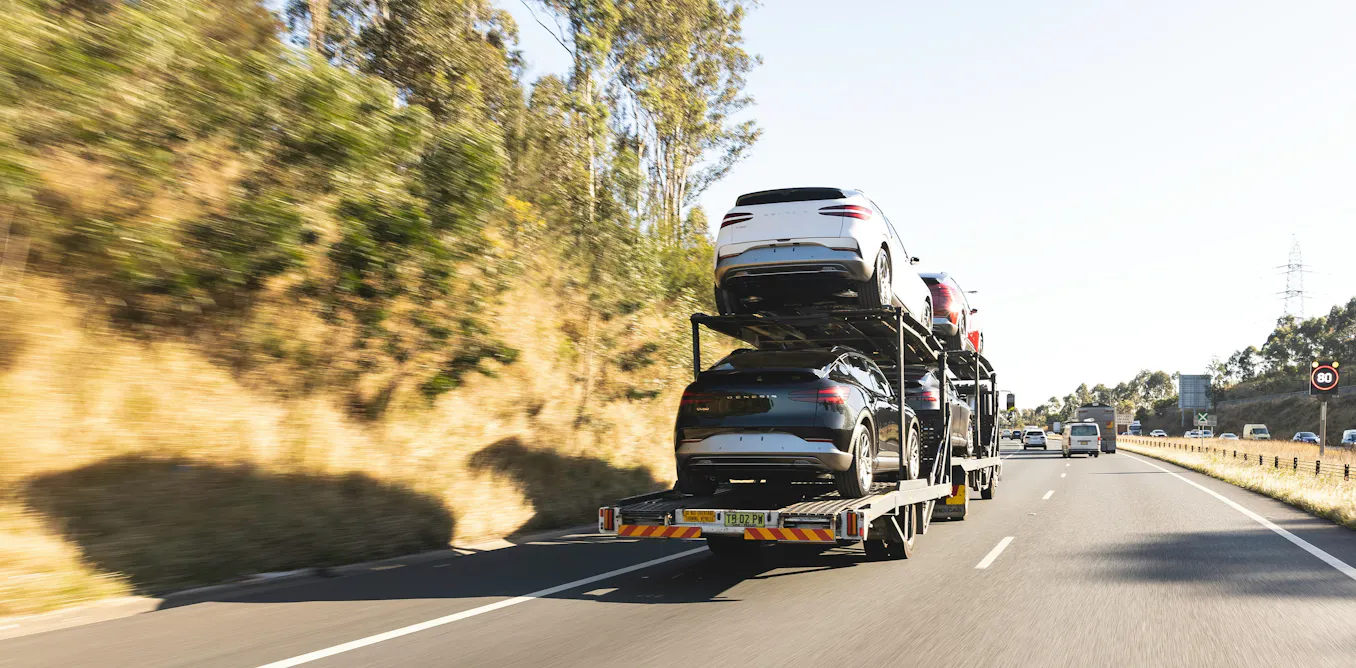
Fuel prices are driving more Australians to EVs - and  secondhand cars are in high demand

Fuel prices are driving more Australians to EVs - and secondhand cars are in high demand

theconversation.com
Visa Unveils New Services to Modernize Dispute Resolution Process

Visa Unveils New Services to Modernize Dispute Resolution Process

www.socialnews.xyz
Penfolds owner staring down bankruptcy

Penfolds owner staring down bankruptcy

www.news.com.au

What to read next